




There is a quiet sentence that appears in the minds of many players during a game. It feels harmless, almost invisible in its importance. Just one more round. It sounds small, like a tiny decision that does not carry much weight. A single round feels too short to matter.
Yet this simple thought has a surprisingly deep effect. It repeats again and again, gently extending a session far beyond what was originally planned. What begins as a few minutes can slowly grow into an hour or more, not because the player decided to stay that long, but because the ending point kept moving forward step by step.
This pattern is not about a lack of control. It is rooted in how the human mind processes decisions, rewards, and time. When you understand what is happening beneath the surface, the repetition of this thought begins to make perfect sense.
The Illusion of a Small Decision
At the heart of this pattern lies a simple psychological trick. When a player says “just one more round,” the brain interprets it as a very small commitment. It does not feel like a long session. It feels like a quick extension.
This is closely related to a principle known as Present Bias. People naturally focus on what feels immediate and small, rather than thinking about long-term accumulation.
In that moment, the player is not thinking about total time or total rounds. They are only thinking about the next few seconds.
After that round ends, the same thought appears again. It feels new, even though it is part of a repeating cycle. The brain treats each decision as separate instead of connecting them into a larger pattern.
It is similar to walking step by step without looking at the full distance. Each step feels easy, but after many steps, the total journey becomes much longer than expected.

Why the Mind Keeps Resetting the Ending
Another important reason this thought repeats is that the brain keeps resetting the “ending point.”
After every round, the player feels like they are close to stopping. But something subtle happens. The condition for stopping changes.
If the player loses, they may think, I will stop after I recover.
If they win, they may think, I will stop after one more good result.
In both cases, the stopping point moves forward.
This behavior connects to what psychologists describe as Goalpost Shifting. The goal keeps changing slightly, making it difficult to reach a clear end.
One player described it in a very simple way:
“I always feel like I’m about to stop, but there’s always one more reason to continue.”
This constant resetting makes the session feel unfinished, even after many rounds.
Hope and the Pull of the Next Moment
Hope plays a quiet but powerful role in this pattern.
Every round carries the possibility of a better outcome. Even if nothing significant has happened yet, the mind holds onto the idea that something good could happen next.
This is closely linked to a concept known as Variable Reward Schedule. When rewards are unpredictable, the brain stays engaged longer because it anticipates a future payoff.
Behavioral psychologist B. F. Skinner showed that unpredictable rewards are one of the strongest ways to sustain repeated actions.
Online games are built around this idea.
The player never knows when the next win or exciting moment will arrive. That uncertainty creates a gentle pull forward.

The Power of Near Misses
One of the most interesting triggers behind “just one more round” is the experience of a near miss.
This happens when a result looks very close to success:
- a symbol almost aligns
- a bonus nearly activates
- a win seems just one step away
Even though it is technically a loss, the brain reacts as if progress is being made.
This is explained by the Near Miss Effect. Studies show that near misses activate similar brain responses to actual wins, increasing motivation to continue.
The player feels like they are getting closer, even when outcomes remain random.
This makes stopping feel difficult, because it feels like leaving just before success.
Real Player Experience
Many players describe this feeling in simple words:
“It always feels like the next round might be the one, so I don’t want to stop yet.”
Another player shared:
“Even when I tell myself I’ll stop, I keep saying just one more because it feels too early to quit.”
These experiences show how natural and widespread this pattern is.
The Absence of Natural Stopping Points
In everyday life, there are clear signals that help us stop.
A meeting ends. A show finishes. A store closes. These moments create boundaries.
But online games remove these natural stopping points.
There is always a next round ready instantly. There is no pause unless the player creates one.
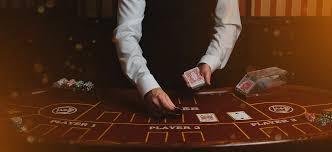
Even physical casinos use similar ideas. In places like Las Vegas Strip, clocks and windows are often absent to maintain immersion.
Online platforms recreate this effect in a more continuous way.
Without clear stopping signals, the brain stays inside the flow.
The Desire for a “Perfect Ending”
Another subtle reason behind repeating “just one more round” is the desire to end on a satisfying note.
People naturally prefer closure that feels complete or positive.
This connects to the Peak End Rule, which suggests that people judge experiences based on their most intense moment and how they end.
If the last round was not satisfying, the player feels the need to try again to create a better ending.
But this creates a loop.
The “perfect ending” keeps getting delayed because the next round always looks like a better opportunity.
Why This Thought Feels So Natural
One of the most important things to understand is that this pattern does not feel forced.
It feels smooth and logical in the moment.
That is because each decision is small. The brain does not resist small actions. It accepts them easily.
This is why the thought is powerful.
It is not loud or urgent. It is quiet, gentle, and easy to agree with.
A Simple Way to Break the Pattern
Awareness is the key to breaking this loop.
Players do not need to avoid games completely. They only need to recognize when the same thought is repeating.
Simple actions can help:
- pause and ask how many times you have said “one more”
- set a clear stopping point before starting
- take short breaks after a fixed number of rounds
- check the time occasionally
These small steps create natural stopping points where none exist.
Final Thought
The phrase “just one more round” is powerful not because it is big, but because it is small.
It feels harmless, easy, and reasonable. But when repeated many times, it quietly extends sessions far beyond what was planned.
Each round feels like a fresh decision, but together they form a continuous chain.
When you understand this pattern, you begin to see it while it is happening.
And sometimes, that awareness is enough to pause, step back, and choose differently.
Because in the end, it is not the single round that matters.
It is how many times that small thought repeats without being noticed.