


Most players begin with a simple and honest intention. They tell themselves they will play for just a few minutes. Maybe a quick session before sleep, or a short break after work to relax the mind. It feels harmless and controlled, almost like a small reward after a long day.
But something very quiet begins to happen once the first round starts. The sense of time starts to loosen. Minutes begin to stretch without being noticed. What was meant to be a short session slowly grows into something much longer. By the time the player looks at the clock, it often feels surprising how much time has passed.
This is not unusual. In fact, it happens to a large number of players across online games. The reason is not lack of discipline or awareness. It is a combination of psychology, game design, and human behavior working together in subtle ways.
The Soft Beginning: “Just One More Round”
Every long session usually begins with a small and harmless decision. A player completes one round and feels that it took only a few seconds. It feels too small to matter.
So the mind suggests something simple: just one more.
That next round also feels short. Then another follows. Each individual action feels tiny and quick, almost insignificant. But these small moments begin to stack together quietly.
This pattern is closely connected to a behavioral loop studied in psychology. It is similar to what researchers describe as the Habit Loop, where a cue leads to an action and is followed by a reward. In gaming, the cue is the end of a round, the action is starting another, and the reward is anticipation or outcome.
Over time, this loop becomes automatic.
Players are no longer deciding actively after every round. They simply continue.
Why Small Moments Feel So Light
One of the biggest reasons sessions extend is because each round feels extremely short. A slot spin or quick game round often lasts only a few seconds.
When the brain processes these short bursts of activity, it does not register them as significant time units. Instead, it focuses only on the present moment.
If a player completes 100 rounds at 3 seconds each, that is already 5 minutes. If they continue, those minutes quietly turn into half an hour or more.
But the brain does not count in totals. It experiences each moment individually.
This is why players often say things like:
“It didn’t feel like I played that long.”
Because in their experience, they did not. They only felt a series of very small moments.
The Flow State That Pulls You Forward
Another powerful factor is the mental state known as Flow State.
This is a condition where a person becomes deeply absorbed in an activity. Their focus narrows, distractions fade, and time becomes difficult to measure.
Psychologist Mihaly Csikszentmihalyi, who introduced this idea, explained:
“People lose track of time when they are completely engaged in what they are doing.”
Online games are designed to create this state very easily. They offer:
- continuous gameplay without pauses
- immediate feedback after every action
- simple interactions that require little effort
- constant visual and sound stimulation
All of this helps the mind stay engaged without needing to think too much.
The Emotional Pull That Extends Play
Emotions play a major role in extending sessions.
Each round creates a feeling. Sometimes it is hope, sometimes excitement, sometimes curiosity. Even small changes in outcomes can trigger emotional responses.
Here is how different emotions influence behavior:
| Emotion | Effect on Player |
|---|---|
| Hope | Encourages continuation |
| Excitement | Increases engagement |
| Frustration | Leads to “one more try” |
| Near-win feeling | Creates belief of being close |
These emotional triggers do not feel overwhelming. They are subtle and quiet. But they keep pushing the player forward.
Behavioral expert B. F. Skinner studied how unpredictable rewards influence behavior. He found that when rewards are uncertain, people tend to repeat actions more often.
Online games use this principle very effectively.
Players never know when the next win will come. This uncertainty keeps the session going longer than planned.
Real Player Thoughts During a Session
If you observe your own thinking during gameplay, it often follows patterns like these:
“I’ll stop after I win once.”
“I’ll stop after this round.”
“Let me just recover what I lost.”
These thoughts move the stopping point forward again and again.
One online player described it clearly:
“I always feel like I’m one good round away from stopping, but that round keeps moving further away.”
This is a very common experience.
The Missing Stop Signals
In everyday life, we have natural signals that tell us when to stop.
A meeting ends. A shop closes. A friend leaves. These moments create clear boundaries.
But online games remove most of these signals.
There is no closing time. No interruption. No forced pause.
The next round is always ready instantly.
This creates a continuous loop where there is no clear endpoint.
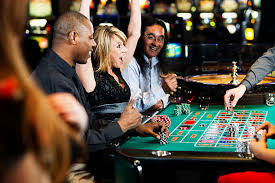
Even physical casinos use similar ideas. In places like Las Vegas Strip, you will rarely find clocks or windows inside gaming areas. The goal is to keep players immersed without time reminders.
Online platforms recreate this effect digitally.
Time Perception Changes With Emotion
Time is not experienced equally in every situation.
Research shows that when people are bored, time feels slow. But when they are engaged or excited, time feels much faster.
Online gaming combines several elements that speed up time perception:
- fast actions
- emotional involvement
- continuous feedback
- minimal effort to continue
This combination makes time feel light and almost invisible.
A study in digital behavior suggests that after about 20 minutes of continuous focus, people begin to lose accurate awareness of time.
That is why a short session can quickly become an hour without the player realizing it.
The Moment of Realization
Eventually, the session ends.
The player pauses, looks at the clock, and suddenly becomes aware of how much time has passed.
This moment often feels surprising.
Time did not move faster. It simply went unnoticed.
The mind was focused elsewhere.
This same effect happens when watching movies, reading books, or having meaningful conversations. But online games are designed to extend this experience for longer periods without interruption.
Staying Aware Without Losing the Fun
Understanding this pattern does not mean you should stop playing entirely. It simply means you can play with more awareness.
Simple habits can help maintain control:
- decide your session length before starting
- set a timer or reminder
- take breaks after every 20 to 30 minutes
- step away after a fixed number of rounds
These small steps bring time back into awareness.
Final Thought
Long sessions rarely begin as long sessions. They begin as small, harmless moments that quietly connect together.
One round becomes another. One minute becomes many. And without clear signals, the mind keeps moving forward.
Time itself is gentle. It does not interrupt or warn you when it passes.
But when you understand how these patterns work, you gain something important.
You keep the enjoyment of the game, while also keeping control of your time.
And that balance is what makes the experience truly yours.